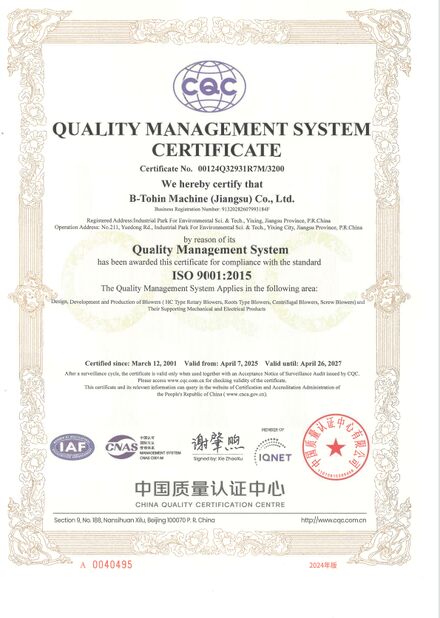
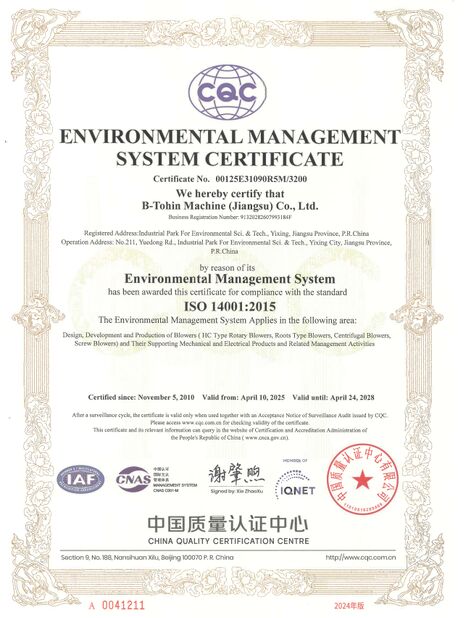
A high-tech enterprise is a comprehensive certification granted by the state to enterprises in terms of core independent intellectual property rights, scientific and technological achievement transformation capability, R&D organization and management level, growth indicators, and other aspects. In 2001, our company was certified as a high-tech enterprise. In 2008, the state required high-tech enterprises to undergo re-certification, including subsequent re-examinations or re-certifications every three years, and our company passed all of them on the first attempt. Obtaining high-tech enterprise qualification not only allows an enterprise to enjoy direct fiscal and tax benefits such as a reduced corporate income tax rate and additional deduction of R&D expenses, but also serves as a strong endorsement of the enterprise's brand value and market competitiveness.
This year, our company B-Tohin has again reached the year for high-tech enterprise re-certification. For a manufacturing enterprise, applying for high-tech enterprise status is not a simple task of organizing materials, but a comprehensive review of the enterprise's technological innovation system, R&D management level, and degree of financial standardization. According to the Administrative Measures for the Recognition of High-Tech Enterprises (Guokefahuo [2016] No. 32), in practice, only enterprises that simultaneously meet the following eight hard indicators can apply, and only those that obtain a relatively high score may be approved.
-
Establishment period: registered and established for more than one year (365 calendar days);
-
Intellectual property: ownership of intellectual property rights that play a core supporting role for the main products (services);
-
Technical field: the core technology belongs to one of the eight major fields stipulated in the National Key Supported High-Tech Fields;
-
Scientific and technological personnel: the proportion of scientific and technological personnel in the total number of employees of the enterprise in the current year is not less than 10%;
-
R&D expense ratio: the total R&D expenses in the past three fiscal years as a proportion of sales revenue meets the standard (see the table below);
-
High-tech income ratio: the proportion of high-tech product (service) income in the most recent year to total income is not less than 60%;
-
Innovation capability: the comprehensive score reaches 71 points or above (out of 100 points);
-
Compliance: no major safety, major quality accidents, or serious environmental violations in the year prior to application.
For our company, the following requirements require particular attention:
I. Attribution of the Enterprise's Technical Field
Blowers belong to a typical general equipment manufacturing industry, and their core technologies usually fall under the following directions in the high-tech fields: subfields such as "new-type machinery" and "intelligent equipment control technology" within advanced manufacturing and automation. It is necessary to select the field direction that best reflects the core technical advantages according to the technical characteristics of the main products, and fully demonstrate the technical attribution in the application materials.
II. Explanation of the Four Major Indicators of Innovation Capability
Innovation capability evaluation adopts a scoring system, with a full score of 100 points; a comprehensive score of 71 points or above is considered passing.
Among them:
-
Intellectual property accounts for 30 points. Emphasis should be placed on the quantity of intellectual property, the degree of advancement of patented technology, and the core supporting role for main products, while at the same time eliminating "padding patents."
-
The capability for transformation of scientific and technological achievements accounts for 30 points. It refers to the transformation of R&D results into products, samples, prototypes, or products already sold, requiring an average annual number of transformations of more than 5 in the past three years, supported by relevant proof materials (high-tech products, sales contracts, testing reports, user acceptance reports, etc.).
-
R&D organization and management level, including R&D management systems, R&D accounting systems, industry-university-research cooperation, R&D institution construction, talent introduction and incentive systems, patent product development assessment and reward systems, etc., supported by relevant proof materials.
-
Enterprise growth accounts for 20 points, including net asset growth rate and sales revenue growth rate. Based on the industry development and the enterprise's actual operating conditions in recent years, this indicator is difficult to score points on.
III. Key Points for Preparing Application Materials
-
Intellectual property-related materials
Provide intellectual property certificates and explanations of technological advancement, with focus on the core relevance to high-tech products (services).
-
R&D activity proof materials
R&D project initiation reports, mid-term inspection records, and project completion acceptance reports must reflect a complete closed loop of "initiation—process—completion."
-
High-tech product (service) proof materials
Specific explanations of key technologies and technical indicators, product testing reports, product standards, user use reports, qualification certificates, etc.
-
Special audit reports
Special audit reports on R&D expenses for the past three fiscal years and special audit reports on high-tech product (service) income for the most recent year. Key requirement: the data in audit reports, tax returns, and R&D expense ledgers must remain consistent; data consistency is the lifeline.


 Your message must be between 20-3,000 characters!